Change Management on a Live Construction Project
A clean change control process keeps the programme honest and the relationship with the client intact. Here is the workflow.
Project names, parties and commercially sensitive figures referenced in this article have been anonymised or generalised. Examples reflect real situations encountered across multiple projects; they are not attributed to any specific client, contractor or contract.
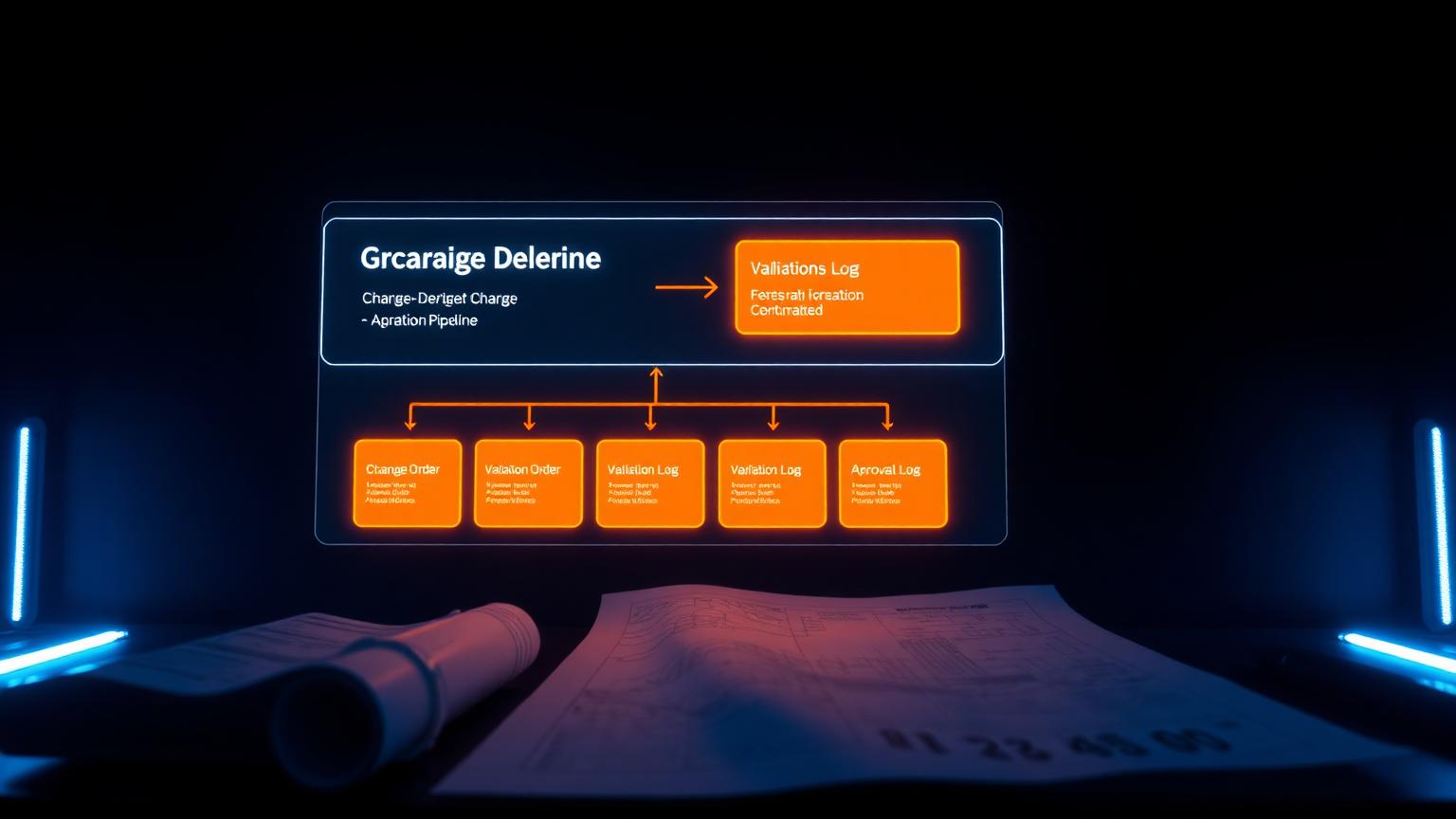
Every construction project changes. The question is whether the change is controlled or absorbed silently into the schedule and the margin. Silently absorbed change is the single largest source of construction disputes, because the cumulative impact only becomes visible at practical completion when no one remembers the individual decisions.
A workable change process has four stages. Identification: anyone on the team can raise a change notice, but it goes nowhere until it is logged. Assessment: a small change board prices it for cost, time and risk within five working days. Authorisation: the client signs or rejects, in writing, before any instruction goes to the trades. Implementation: the schedule and the budget are updated the same day the change is authorised, not at month end.
The log is the single source of truth. Every change has a number, a status, an owner, a cost impact, a time impact and a date. If a change is not in the log it does not exist. The log lives where the team can see it — printed weekly on the site office wall, or projected on the screen at the weekly meeting. Out of sight means out of mind, and out of mind means uncontrolled.
Five working days is the right SLA for assessment. Faster than that and the assessment is unreliable; slower than that and the project absorbs the change while waiting. The discipline of meeting the SLA matters more than the elegance of the pricing — a rough number now beats a perfect number in three weeks.
Cumulative impact is where most projects lose control. A series of individually trivial changes — a finishes upgrade here, a layout tweak there — looks like noise on the log but adds up to a fundamental scope change by month nine. Run a cumulative impact review every quarter: total cost of changes, total time impact, scope drift assessment. A 5% cumulative change is healthy; 15% is a renegotiation conversation.
Distinguish client-initiated change from contractor-discovered change and from authority-driven change. Each has a different evidence requirement and a different commercial pathway. Mix them together in one log and you weaken your position on all three. The categories matter for both transparency and contract performance.
Hold the line on this and the conversation with the client at practical completion becomes a five-minute reconciliation instead of a six-month dispute. The contractor who tracks change relentlessly is the contractor who gets paid for it.
One last point. The change board needs the authority to assess and the discipline to meet its own SLA. A change board that drifts from weekly to fortnightly to monthly is signalling that the project does not respect its own process — and the trades will respond accordingly, by acting on instructions that have not been authorised. That is how disputes start.
Construction project manager (PMP, MCIOB) with 20+ years on infrastructure, commercial and industrial builds across the GCC and NZ. Writes about the controls, contracts and field practices that actually move projects.
Read full bio →