The Subcontractor Procurement Checklist I Use on Every Package
Pre-qualification, scope clarity, programme alignment, payment terms and back-charge protection — the items that prevent the call at 11pm.
Project names, parties and commercially sensitive figures referenced in this article have been anonymised or generalised. Examples reflect real situations encountered across multiple projects; they are not attributed to any specific client, contractor or contract.
A bad subcontractor appointment is the single most expensive mistake on a construction project. The cost is rarely in the tender price; it is in the delays, the rework, and the legal time at the end. The checklist below comes from packages I wish I had run differently, more than from textbook procurement guidance.
Pre-qualification has to be more than financial. The financial check is necessary but not sufficient. Walk a current site of the bidder, talk to the foreman, ask about supervision ratios, and look at their last three programmes for slippage. A bidder who cannot or will not give you a current site visit is telling you something about how confident they are in their own work.
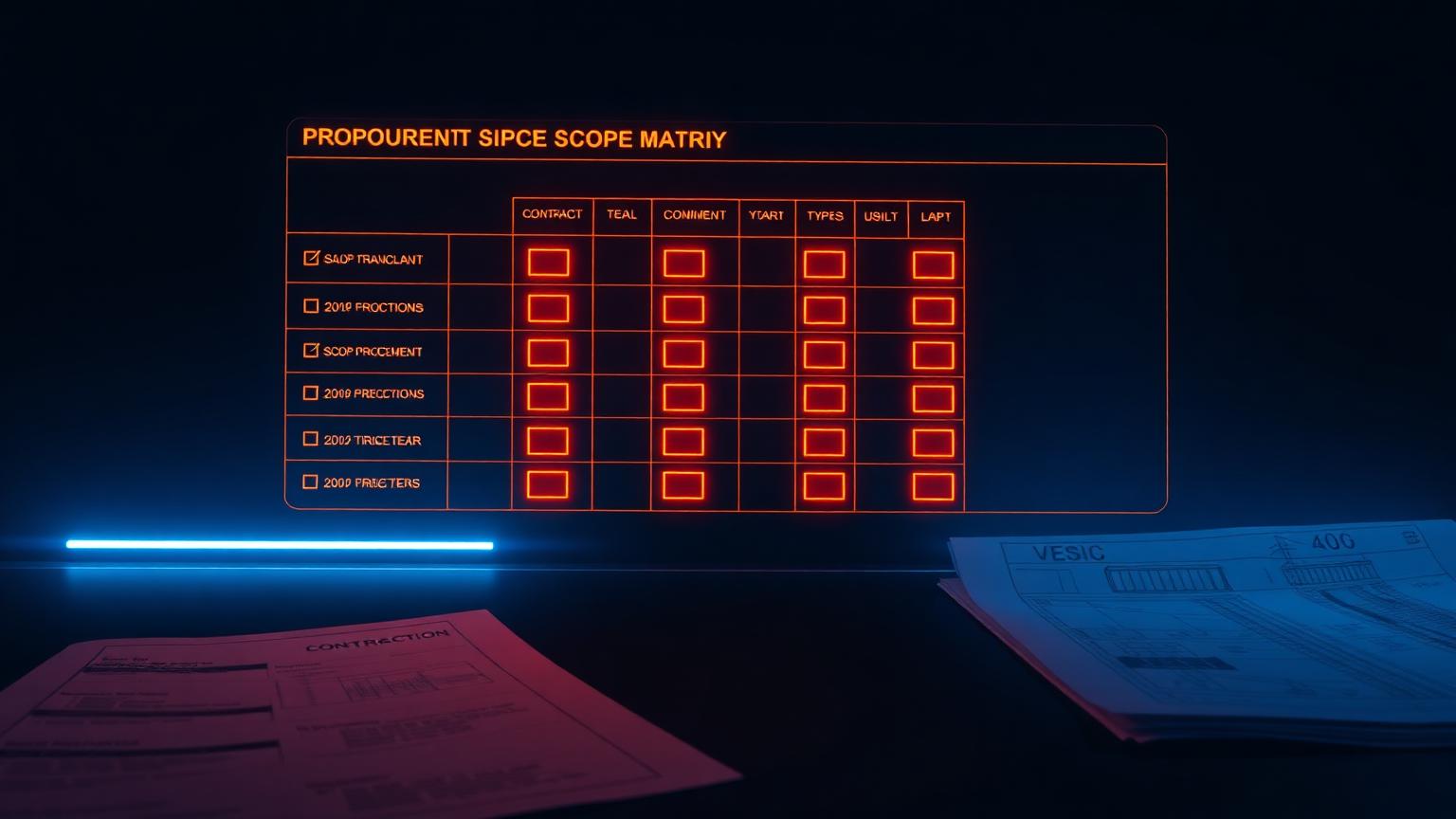
Scope clarity comes from a single source — the subcontract scope matrix, not the email trail. Every interface with the main contractor and adjacent trades must be named. Who supplies what, who installs what, who tests what, who signs off what. Build the matrix in tender and freeze it in award. Variations come later through change control; they should not be the first time an interface is discussed.
Programme alignment means the sub builds their own three-week look-ahead off the master programme and signs it back. If they cannot produce one, you have your first warning. The bid programme that came in with the tender is marketing; the look-ahead is the management tool. Make the look-ahead a contractual deliverable from week one.
Resource and supervision ratios should be a contractual schedule. Number of operatives per crew, number of crews per zone, minimum supervisor presence, minimum site engineer presence. Without these, the sub will under-resource the early weeks, run behind, and then ask for extension of time. With them, you have the contractual basis to direct an increase.
Payment terms and back-charge protection close the loop. Retention, milestone gates, and a documented back-charge process protect the project when things go sideways — and they will. Pay-when-paid clauses are unenforceable in most jurisdictions; do not write them. Pay-on-progress with retention is the workable model.
Insurance, indemnity and bonds need a checklist of their own. Public liability, contract works, professional indemnity (if design responsibility), employer's liability, motor vehicle for mobile plant. Currency dates and values matter; an out-of-date certificate is functionally an uninsured contract. The procurement team should track currency dates and chase renewal 30 days out.
Termination and exit clauses are unloved but essential. A documented step-in right, a clear notification regime, and an agreed pricing mechanism for unfinished work make a bad termination painful but survivable. Without them, a failed subcontractor can hold the programme hostage for months.
Construction project manager (PMP, MCIOB) with 20+ years on infrastructure, commercial and industrial builds across the GCC and NZ. Writes about the controls, contracts and field practices that actually move projects.
Read full bio →